Coffee Stories · Beans & Origins
Arabica vs Robusta: What's the difference?
The two beans that shape almost every cup you drink.
3 min read
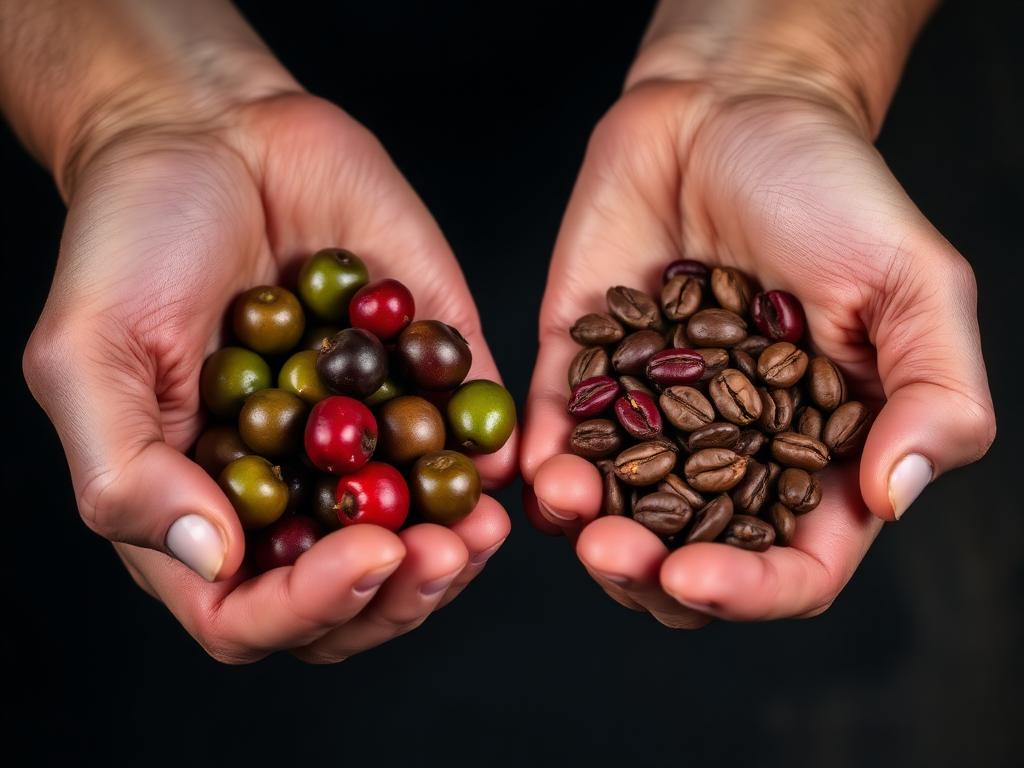
Every cup of coffee you have ever had came, almost certainly, from one of two plants: Coffea arabica or Coffea canephora, better known as Robusta. They account for nearly all the coffee grown on Earth, and the differences between them explain a surprising amount about what ends up in your cup — and how much you pay for it.
Start with where they grow. Arabica is the fussy one. It thrives at high altitudes, typically 1,000 to 2,200 meters, needs mild temperatures, steady rainfall and is vulnerable to pests and disease. Robusta lives up to its name: it grows happily at low altitudes in hot, humid climates, shrugs off many diseases and produces higher yields per tree. That hardiness comes largely from caffeine — Robusta carries roughly twice as much, about 2.2 percent by weight versus Arabica's 1.2 percent, and caffeine is a natural insecticide.
Now taste. Arabica has nearly double the natural sugars and about 60 percent more lipids than Robusta. In the cup that means sweetness, body and a wide range of flavors: chocolate, caramel, stone fruit, berries, florals, depending on origin and roast. Its acidity is brighter and more refined. Robusta, by contrast, tends toward earthy, woody and rubbery notes, with pronounced bitterness and a heavier, sometimes harsh body. Blind tastings are rarely kind to it.
So why does Robusta still make up around 40 percent of world production? Three reasons: it is cheaper to grow, it delivers a bigger caffeine kick, and it produces magnificent crema. That dense, long-lasting foam on an espresso owes a lot to Robusta's chemistry, which is why traditional Italian espresso blends often include 10 to 30 percent of it. A little Robusta adds body, crema and punch; skilled blenders treat it like a spice rather than the main ingredient.
Price follows quality and difficulty. Arabica trades at a significant premium, and specialty-grade Arabica — carefully picked, processed and graded — commands far more again. When a café talks about single origins, tasting notes and processing methods, it is talking about Arabica. Instant coffee, on the other hand, leans heavily on Robusta, which is part of why instant tastes the way it does.
It is worth saying that Robusta is having a quiet renaissance. A new wave of producers, particularly in Vietnam, India and Uganda, is applying specialty-level care to Robusta: picking only ripe cherries, processing cleanly, roasting thoughtfully. The results — sometimes labeled "fine Robusta" — can be genuinely pleasant: bold, chocolatey, low in acidity. Climate change is also pushing researchers toward Robusta and hybrids, since rising temperatures threaten many traditional Arabica regions.
How do you use this knowledge? Read the bag. "100% Arabica" tells you the producer is signaling quality, though it is no guarantee — there is plenty of mediocre Arabica in the world. If you love a thick, punchy espresso with heavy crema, a blend with some Robusta may actually suit you better than a delicate single origin. If you drink filter coffee and enjoy nuanced flavors, Arabica is your lane.
There is no morally correct bean. There is the coffee you enjoy, and now you know why it tastes the way it does. The next time someone dismisses Robusta entirely — or insists crema-topped espresso must be pure Arabica — you will have the facts to gently complicate their morning.