Coffee Stories · Brewing
French press, done properly
The brewer you already own makes better coffee than you think.
3 min read
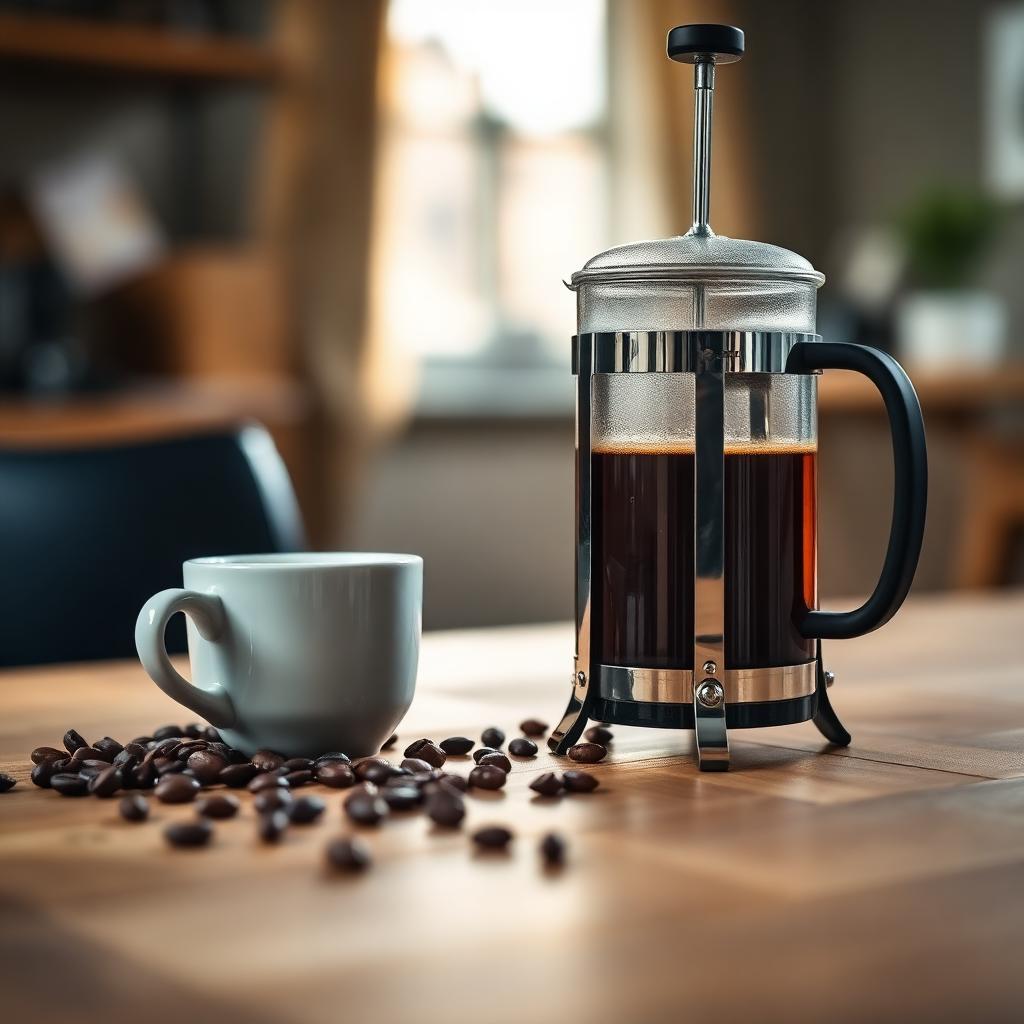
The French press might be the most underrated brewer in the world — and the most commonly misused. Most people own one; few use it well. The difference between muddy, bitter press coffee and a rich, sweet, full-bodied cup comes down to a handful of small corrections.
First, the grind. The classic advice says "very coarse," but that is half the problem: extremely coarse grinds under-extract and taste flat, so people compensate by steeping forever, which makes things bitter. Aim instead for a medium-coarse grind — like coarse sand rather than breadcrumbs — from the freshest beans you can get. If you can, grind at home; pre-ground coffee loses its aromatics within days.
Second, the ratio. Use about 60 to 65 grams of coffee per liter of water — for a standard 350 ml mug, that is roughly 22 grams, or three generous tablespoons of beans. Weakness is the most common French press complaint, and it is almost always a dosing problem, not a steeping problem.
Third, the method. Boil your water and let it rest for 30 seconds. Add coffee, pour all the water confidently over the grounds, give one gentle stir, and put the lid on with the plunger raised. Now wait four minutes. No pressing, no fiddling.
Here is the professional trick that transforms the result: after four minutes, do not plunge yet. Stir the crust of grounds floating on top, then use a spoon to skim off the foam and floating particles. Wait another four or five minutes while the remaining grounds sink. Then press the plunger only to the surface of the liquid — just enough to hold back stragglers — and pour gently. Because you are no longer forcing the plunger through a thick slurry, far less sediment ends up in your cup, and the coffee tastes dramatically cleaner while keeping the rich body that makes the press special.
One final rule: never let brewed coffee sit on the grounds. Once you have pressed, pour every drop, into cups or a carafe. Coffee left standing in the press keeps extracting and turns bitter within minutes.
What you get, done this way, is a cup with weight and sweetness that paper-filtered methods cannot match — all the oils and richness intact, without the mud. Chocolatey Brazilians, nutty Colombians and full-bodied Indonesian coffees are natural matches for the press, though a fruity natural Ethiopian through a French press is a quiet revelation.
The French press asks for nothing: no filters, no machine, no technique beyond patience. Eight minutes, one stir, one skim. It might already be the best brewer in your kitchen — it was just waiting for better instructions.