Coffee Stories · History
Gahwa: The story of Arabic coffee
Cardamom, a golden dallah, and 500 years of hospitality in a tiny cup.
3 min read
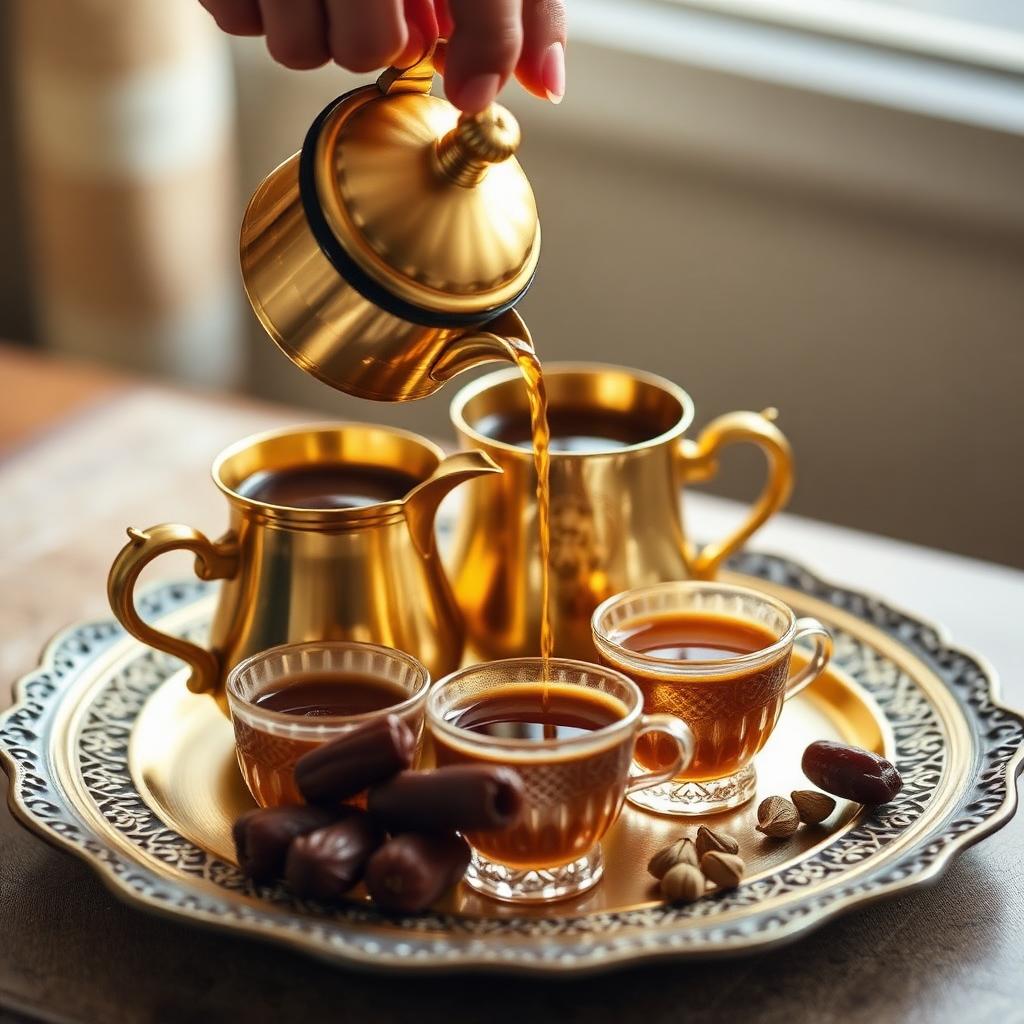
Long before espresso machines hissed in Milan — before Europe had tasted a single cup — coffee already had a golden age, and it spoke Arabic. The story of gahwa is the story of coffee''s first act, and in the Gulf it never ended.
Coffee crossed from Ethiopia to Yemen around the 15th century, where Sufi monks brewed qahwa to stay awake in night devotions. From Yemen''s port of Mocha it spread through Mecca, Cairo and Damascus, carried along pilgrimage and trade routes into every corner of the Arab world — reaching the Gulf long before it ever reached Venice. The very word "coffee" is qahwa, worn smooth by its journey through Turkish kahve and Dutch koffie.
Gulf gahwa became its own tradition, distinct from the dark, thick coffee of the Levant and Turkey. The beans are roasted lightly — golden to pale brown, never dark — then ground and simmered with generous cardamom, often saffron, sometimes cloves or a splash of rose water. The result is pale, fragrant and gentle: closer to an aromatic infusion than to an Italian espresso, designed for many small cups across a long conversation.
The serving is where gahwa becomes ceremony. It is poured from the dallah — the elegant long-spouted pot that appears on the UAE dirham coin — into small handle-less cups called finjan, always with the right hand, always beginning with the guest of honor or the eldest. The cup is filled only a third full: a full cup would suggest you want the guest to drink and leave, while a small pour promises refills and a long welcome. When you have had enough, you tilt the cup side to side; until you do, the pouring continues. Dates are the constant companion, their sweetness balancing the cardamom''s spice.
None of this is decorative. Gahwa is the opening move of Gulf hospitality — offered to guests within moments of arrival in homes, majlis gatherings, weddings and business meetings alike. Generosity with coffee has been a measure of honor here for centuries; in 2015, UNESCO inscribed Arabic coffee on its list of humanity''s intangible cultural heritage, jointly nominated by the UAE, Saudi Arabia, Oman and Qatar.
The tradition is thriving, not fading. Emirati cafés serve gahwa alongside flat whites; specialty roasters experiment with cardamom-infused single origins; a new generation is learning the dallah at home. And there is a pleasing symmetry in that: the region that gave the world its first café culture five hundred years ago is now one of the most vibrant specialty coffee scenes anywhere.
Next time someone pours you a third of a finjan, you will know: it is not a small coffee. It is an old promise that you are welcome to stay.