Coffee Stories · Roasting
How to taste coffee like a pro
Where do "notes of peach" come from? Your palate already knows — here's how to switch it on.
3 min read
"Notes of peach, jasmine and brown sugar." Every specialty bag makes claims like this, and most people privately taste... coffee. The good news: tasting is not a gift, it is a technique. Professionals train it, and the basics take one attentive week to switch on.
First, understand what you are tasting for. Coffee flavor has four pillars. Sweetness is the backbone — good coffee tastes subtly of caramel, honey or fruit sugar without any sugar added. Acidity is the sparkle: not sourness, but the pleasant brightness that makes coffee lively instead of flat — think of the difference between still and sparkling water. Body is the physical weight on your tongue: tea-like and delicate, or syrupy and heavy. Bitterness in small amounts provides structure; in large amounts it just means over-extraction or a roast pushed too dark.
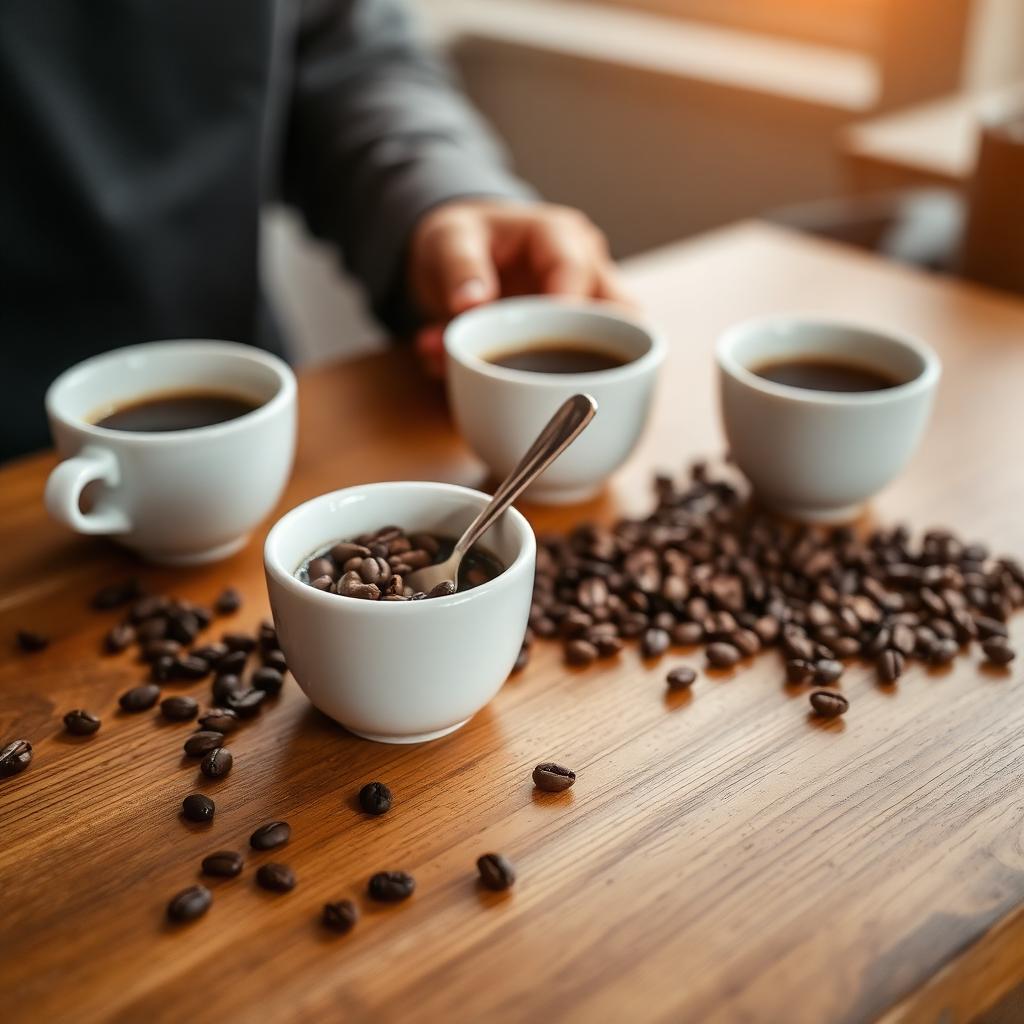
Now the method, borrowed from professional cupping. Brew a coffee black — no milk, no sugar, ideally a filter method. Smell it before sipping; aroma carries most of what we call flavor. Then take a genuinely rude slurp. Spraying the coffee across your whole palate with air is not bad manners in tasting; it is the technique, because it aerates the coffee and reaches every receptor at once. Let it sit a moment. Notice where it registers: brightness at the sides of the tongue, sweetness at the tip, bitterness at the back. Then pay attention to the finish — what lingers after you swallow. Quality coffee leaves sweetness and perfume; poor coffee leaves cardboard and regret.
Do not chase "peach" on day one. Start with binary questions. Is this heavier or lighter than yesterday''s cup? Brighter or duller? Sweeter or more bitter? Comparison is the entire secret — one coffee in isolation is hard to describe, but two side by side reveal each other instantly. Brew an Ethiopian and a Brazilian on the same morning and the difference will be so obvious you will wonder how you never noticed it.
Then borrow vocabulary. When a bag says "blackcurrant," taste for it — not expecting literal fruit juice, but a family resemblance, the way a wine can be "buttery" without butter. Tasting notes are shared reference points, not lab results. The coffee flavor wheel, if you look it up, works from broad categories (fruity, nutty, floral) toward specifics; move from the center outward and never feel embarrassed to stop at "red fruit, sort of."
Finally, taste your own coffee critically at home. Sour and thin usually means under-extracted — grind finer. Harsh and drying means over-extracted — grind coarser. The same skill that finds peach in a Yirgacheffe also fixes your morning brew, which is the most practical reason to develop it.
One week of slurping and comparing, and the poetry on the bag starts becoming legible. Your palate was never the problem — it was just never asked to pay attention.