Coffee Stories · Brewing
Pour-over at home: A step-by-step guide
One cone, one kettle, and the cleanest cup of coffee you've ever made.
3 min read
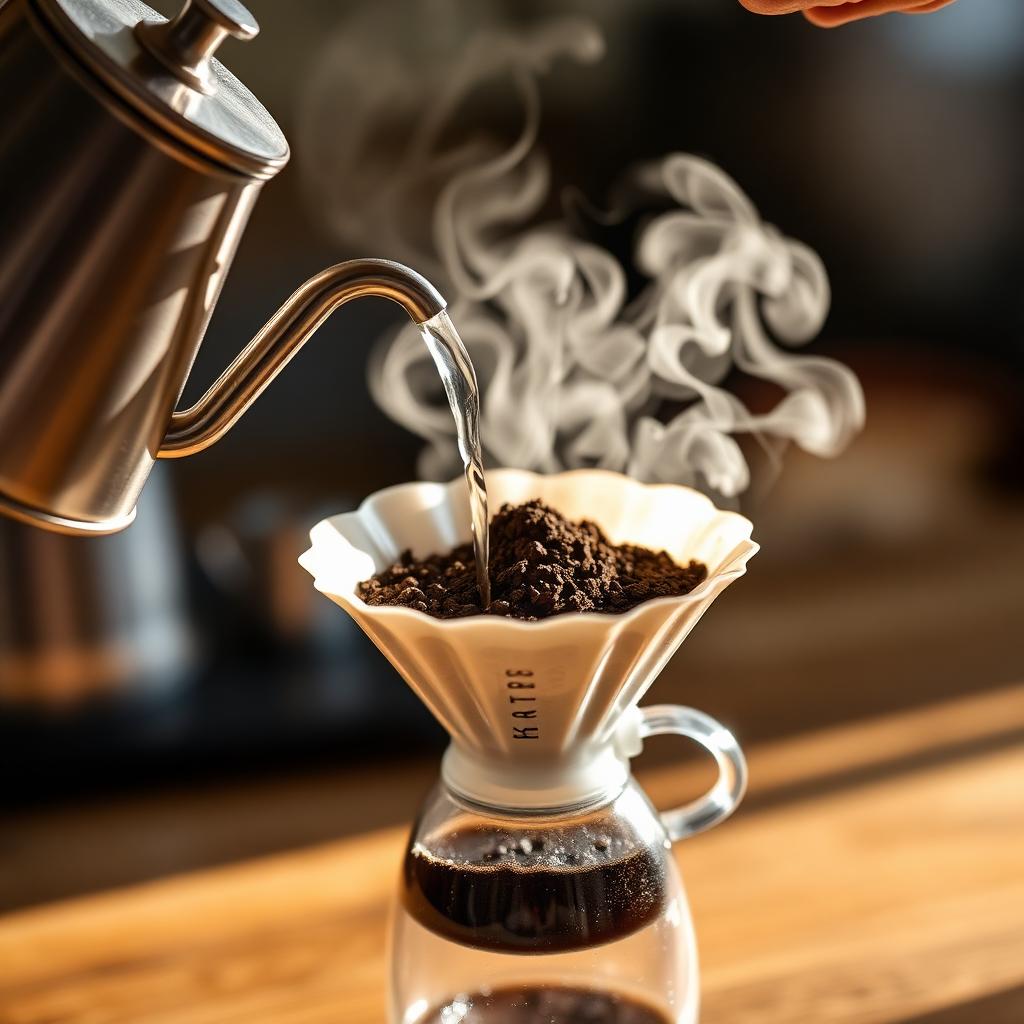
If espresso is a sports car — fast, intense, demanding — pour-over is a good bicycle: simple, honest and entirely under your control. It is also the cheapest route to genuinely excellent coffee at home. A plastic cone, paper filters and a way to pour hot water slowly are all you need to start.
Pour-over earns its place by clarity. The paper filter catches oils and fine sediment, leaving a clean, transparent cup where every flavor in the bean is legible. Florals, citrus, berries, honey — the delicate notes that disappear in a French press or under milk are exactly what pour-over shows off. It is the method coffee professionals reach for when they want to taste what a coffee really is.
Here is a reliable recipe for one large mug. You will need 20 grams of coffee (about three tablespoons of beans) and 320 grams of water just off the boil, around 92 to 96 degrees Celsius. Grind medium — similar to coarse sand. If you have no scale, use it anyway; fine, use one rounded scoop per 100 ml and start saving for a scale. It is the best 50 dirhams a coffee lover can spend.
Step one: fold your paper filter along the seam, seat it in the cone, and rinse it thoroughly with hot water. This kills the papery taste and preheats everything. Dump the rinse water.
Step two: add the ground coffee, shake it level, and place the whole setup on your scale. Tare to zero.
Step three: the bloom. Start a timer and pour about 60 grams of water — roughly twice the weight of the coffee — wetting all the grounds. Watch them swell and bubble. That is carbon dioxide escaping from freshly roasted coffee, and letting it out first ensures even brewing. Give it 30 to 45 seconds. If your coffee barely blooms, it is likely past its prime.
Step four: pour the rest of the water in two or three slow additions, spiraling gently from the center outward and avoiding the filter walls. Aim to reach your total of 320 grams by around the two-minute mark. Keep the water level steady rather than flooding the cone.
Step five: let it draw down. The bed should look flat when finished, and the total brew time should land somewhere between two and a half and three and a half minutes. Swirl the brewer gently, remove the filter, and pour.
Taste, then adjust one thing at a time. Too sour or weak and watery: grind finer, or pour slower. Bitter or drying: grind coarser, or drop your water temperature slightly. Too intense overall: use a touch less coffee. The recipe is a starting point; your taste is the destination.
A few upgrades pay off quickly. A gooseneck kettle gives you the slow, controlled pour that regular kettles make difficult. Freshly roasted beans, ground just before brewing, matter more than any equipment. And soft, filtered water will noticeably outperform whatever comes out of most taps.
The whole ritual takes four minutes, and that is part of its charm. No machine hums for you; you are the machine. On a quiet morning, standing over a blooming cone of coffee while the kitchen fills with its smell, you may find the brewing becomes as valuable as the caffeine. That is the pour-over trap, and it is a pleasant one to fall into.