Coffee Stories · Brewing
Water: The ingredient you're ignoring
Your coffee is 98% water. Maybe stop treating that as a detail.
3 min read
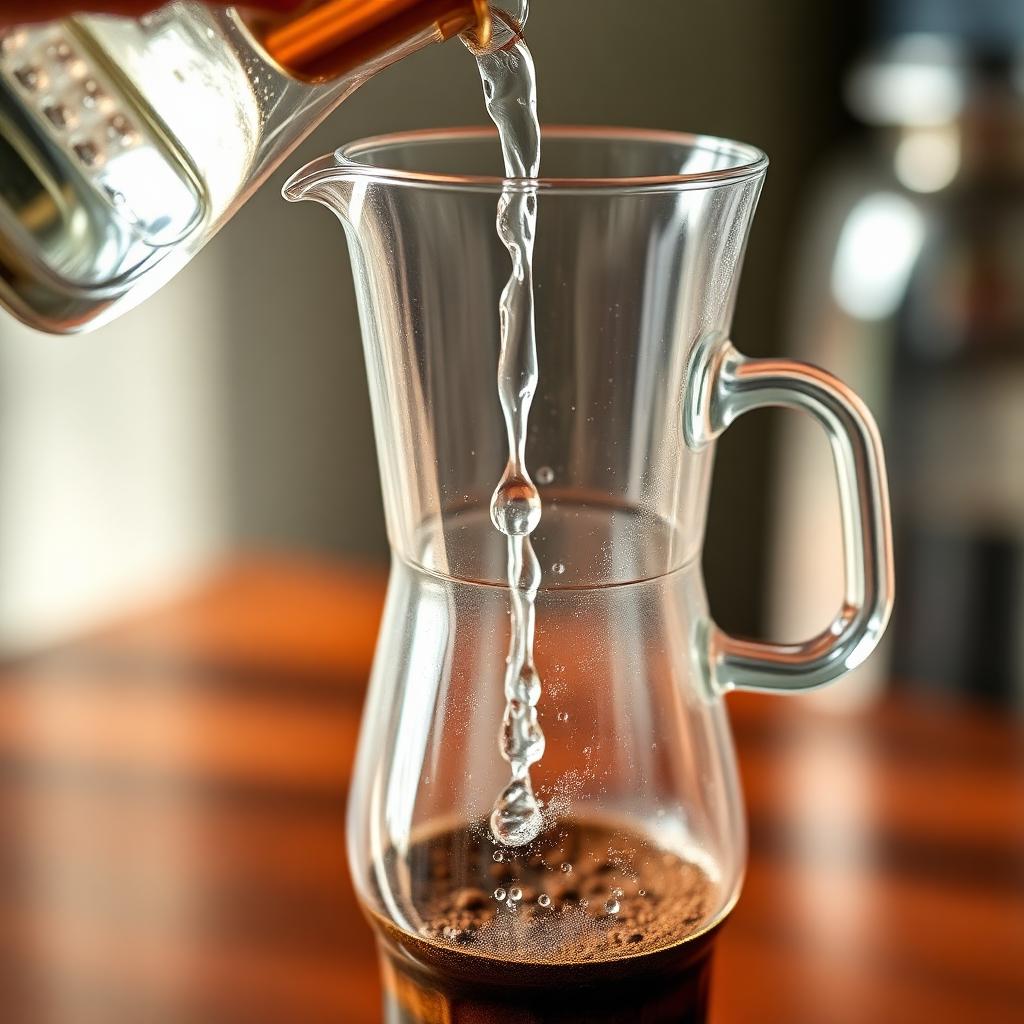
Here is a fact that reframes everything: a cup of filter coffee is about 98.5 percent water. You can buy competition-grade beans, grind them on a beautiful burr grinder and brew with obsessive precision — and still make mediocre coffee, because the largest ingredient came straight from a questionable tap.
Water is not neutral. It is the solvent doing the actual work of extraction, and its chemistry decides what gets pulled from the grounds. Two things matter most: mineral content and freshness from chlorine.
Minerals first. Magnesium and calcium ions are flavor magnets — they bind to the aromatic compounds in coffee and carry them into your cup. Distilled or reverse-osmosis water, with nothing dissolved in it, brews flat, hollow coffee no matter the bean. But too many minerals cause the opposite problem: very hard water over-emphasizes heavy, dull flavors, mutes acidity and, in espresso machines, builds cup after cup of scale that eventually kills the boiler. The sweet spot sits in the middle — moderately soft water with some magnesium, moderate calcium and a little bicarbonate to buffer acidity. The specialty coffee world targets roughly 50 to 150 parts per million of total dissolved solids.
This matters regionally. In the UAE and much of the Gulf, tap water is desalinated and then remineralized, and its profile varies by area and building. It is often perfectly safe but not ideal for brewing — sometimes too low in the minerals that matter, sometimes carrying tank or pipe character. If your coffee at home never quite tastes like it did at the café, water is the first suspect.
Chlorine is the second enemy. Even small amounts of chlorine or chloramine, harmless to drink, react with coffee compounds and produce flat or faintly medicinal flavors. The good news: a simple carbon filter — a standard filter jug — removes it almost entirely.
So what should you actually do? The pragmatic ladder looks like this. Step one: brew with filtered water from a carbon jug filter instead of straight tap. For most people this is an immediate, noticeable upgrade and costs very little. Step two: try bottled water with a low mineral label — look for total dissolved solids under about 150 on the label — and compare against your tap side by side. Step three, for the obsessed: buy mineral sachets made for coffee brewing, or blend a mineral-rich bottled water with distilled water to hit the target zone. Espresso machine owners should take this seriously regardless of taste, because descaling is a chore and boiler repairs are not cheap.
Run one experiment this week: brew the same coffee, same recipe, once with tap water and once with filtered or low-mineral bottled water. Taste them next to each other. Most people pick the difference instantly — and once you taste it, you will never again spend money on good beans while ignoring the ingredient that makes up 98 percent of the cup.