Coffee Stories · Beans & Origins
A world tour of coffee origins
Ethiopia's florals, Colombia's balance, Sumatra's earth — learn the map, and menus start making sense.
3 min read
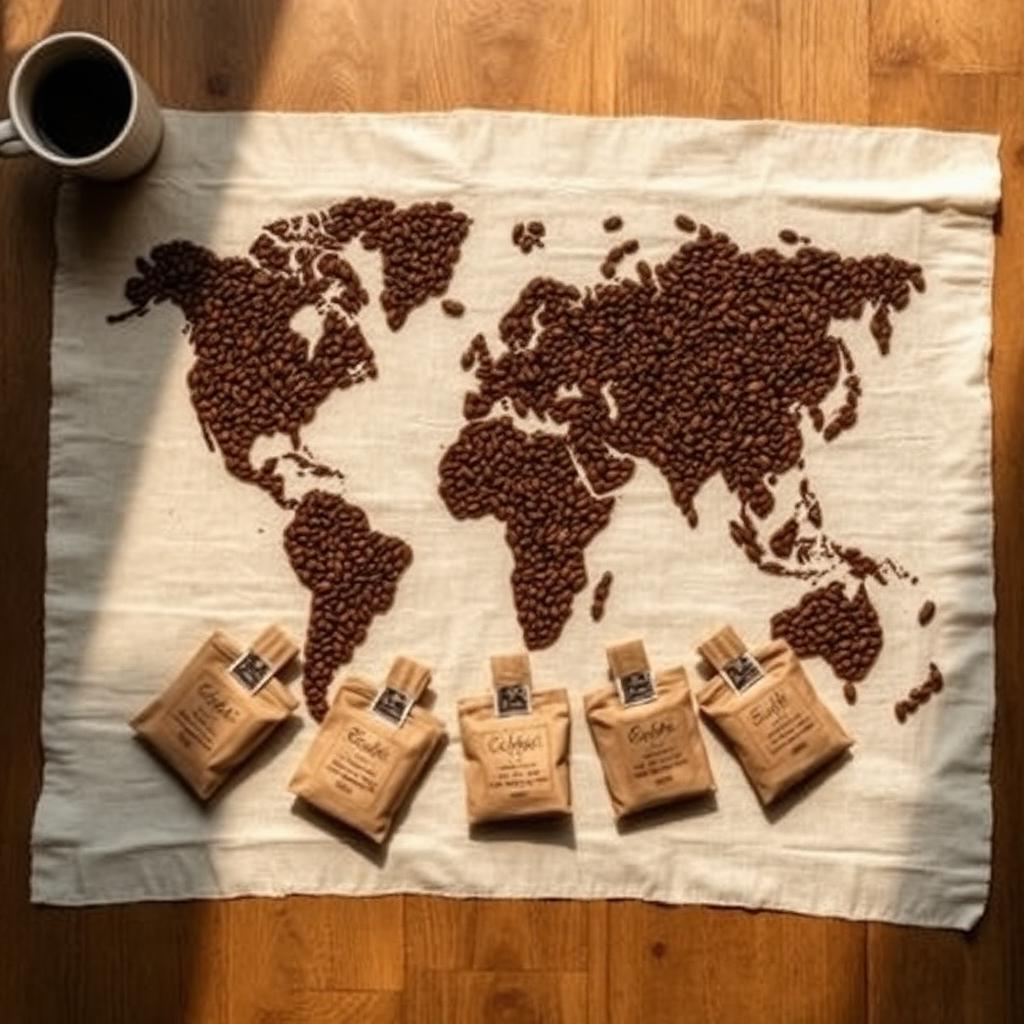
Every coffee menu is secretly a map. Ethiopia, Colombia, Brazil, Sumatra — those names are not decoration; they are flavor predictions. Coffee grows only in the "bean belt," the band between the Tropics of Cancer and Capricorn, but within that belt, geography, altitude and tradition give each origin a recognizable personality. Learn a handful of them and you will never order blind again.
Start in Africa, coffee''s birthplace and still its most exciting corner. Ethiopia offers the widest flavor spectrum on Earth: washed coffees that taste of jasmine, bergamot and lemon; naturals that burst with blueberry and strawberry. Kenya produces some of the world''s most vivid coffees — blackcurrant, tomato-like savoriness, sparkling acidity — grown from its famous SL28 and SL34 varieties. Rwanda and Burundi offer silky, red-fruited elegance. If you like coffee that surprises you, Africa is your shelf.
Cross to Latin America, the reliable heart of world coffee. Colombia is the definition of balance: caramel sweetness, red apple acidity, medium body — the coffee that pleases everyone. Brazil, the world''s largest producer by far, leans nutty and chocolatey with low acidity, which is why it anchors most espresso blends. Guatemala brings cocoa and spice complexity from volcanic slopes; Costa Rica, clean sweetness and famous honey-processed lots; Panama grows the legendary Geisha variety, whose floral, tea-like cups fetch record prices at auction.
Then Asia and the Pacific, the origin of body. Sumatra, in Indonesia, is unmistakable: earthy, herbal, heavy, low in acidity — flavors shaped by its unique wet-hulling process. People tend to love it or leave it, with no middle ground. India contributes spicy, full-bodied coffees including monsooned Malabar, deliberately exposed to humid winds for a mellow, almost woody character. Vietnam, the world''s second-largest producer, grows mostly Robusta and powers the world''s instant coffee — plus its own glorious iced coffee culture built on condensed milk.
And do not overlook the Arabian chapter. Yemen, across the Red Sea from Ethiopia, is where coffee was first cultivated as a crop, and its wild, winey, dried-fruit naturals — grown on ancient terraces — remain rare treasures. Neighboring Saudi Arabia''s Jazan region and the wider Gulf keep a centuries-old coffee heritage alive that long predates any espresso machine.
A few honest caveats. Origin describes tendency, not destiny: processing, variety and roast can override everything. A natural-processed Colombian can out-fruit an Ethiopian; a dark roast flattens any origin into smoke and chocolate. Altitude generally means quality — higher farms grow slower, denser, more complex beans. And "single origin" tells you where a coffee is from, not that it is good.
The practical takeaway: think of origins as genres, not guarantees. Ethiopia and Kenya are your bright, fruity playlist; Colombia and Guatemala the balanced classics; Brazil and Sumatra the heavy, comforting deep cuts. Pick a genre for your mood, then let the roaster''s notes fine-tune the choice. One origin a week, and within two months you will have tasted your way around the planet.